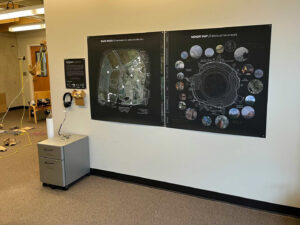
Themes: Time, Landscape, Memory, Consumption, Waste, Transformation
Format: Poster / Video
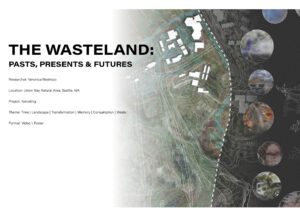
As a criticism of the scientific world, Bruno Latour states that “soon nothing will be left of [a] top-down model of scientific influence.” What do we know about our own waste? By reconceptualizing Seattle’s largest historical landfill, now known as the Union Bay Natural Area (UBNA) as an assemblage of realities, we can use waste as an act of remaking the world. A series of black holes appear on the site which reveal speculations on its past, present, and future through a blending of realities and fantasies – knowing there is no one solution to the problem of urban waste.
From landfill to ‘natural area,’ the transformation of this site has downplayed the significance of our hyper-consumerist culture. Waste is a physical expression of the power hierarchies that often build on colonial pasts, and interventions in the present. Sitting on the remnants of the city’s trash, the UBNA erases our past misuse of the landscape and instills an ideal, yet manufactured nature in its place. This silencing of history in the region, and our realities of urban development, only serves to demonstrate our seemingly contradictory intentions- to foster a connection with nature and to expand at its expense.